Original: $26.99
-65%$26.99
$9.45The Story
Julius Eastman and Will Oldham are kindred spirits. Self-styled provocateurs, they have positioned themselves on the outskirts of distinct traditions, pulling all manners of musical influence towards their outré stance. Eastman, who passed away in 1990 and whose work is experiencing a necessary revival, harnessed the vocabulary of minimalism for joyfully insurgent ends; Oldham’s songwriting regularly conjures a pantheon that Greil Marcus called “the old, weird America.”
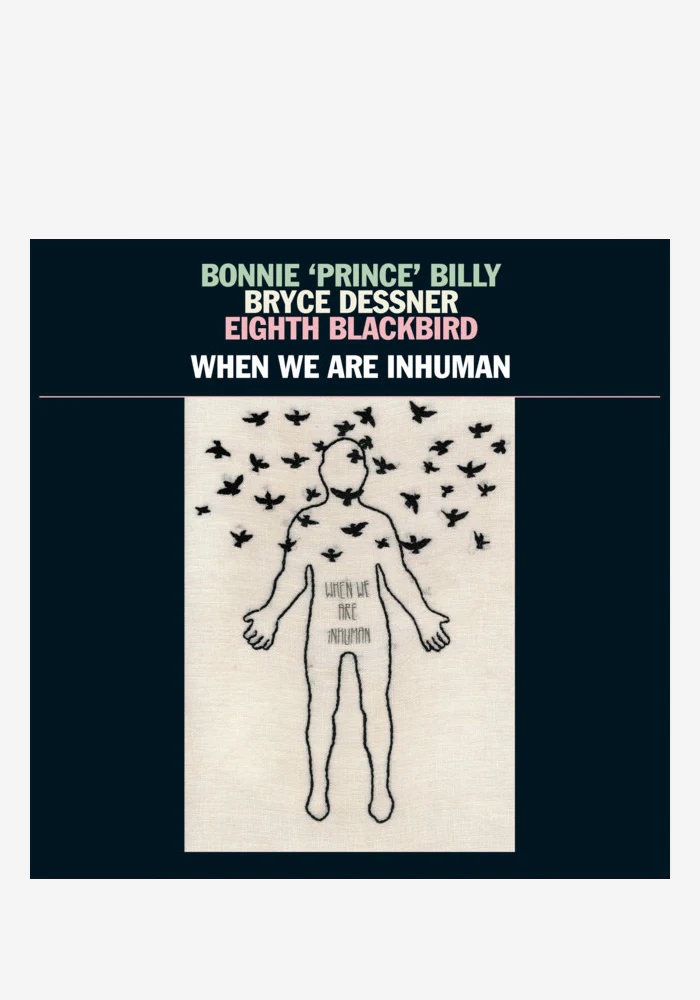
Last spring, these two visionaries collided at Cincinnati’s MusicNOW Festival, and any distance between them was mediated by curator Bryce Dessner and ensemble Eighth Blackbird. On this album, woven between new arrangements of Oldham’s cryptic songs and Eastman’s iconic “Stay on It” are several of Dessner’s “Murder Ballades,” works that tease out the homicidal strain of old folk tunes. In “Down in the Willow Garden,” a classic Appalachian tune, Oldham sings bleary-eyed atop harshly twanging timbres; “Underneath the Floorboards” takes inspiration from a recent murderous classic by Sufjan Stevens.
These explorations of violence are natural fits for Oldham, who has always examined the interstices between intimacy and cruelty. Four of his songs appear here in new, sumptuous arrangements by pianist Lisa Kaplan. In Cincinnati, Oldham compared working with Eighth Blackbird to becoming acquainted with a “haunted house,” continually returning to the same spot and observing how his fear was interlaced with a charged energy. The arrangements push Oldham’s voice to new heights, as in the ecstatic refrain of “New Partner” or the lithe polyrhythms of “Beast for Thee.” On “One with the Birds” and “When Thy Song,” shimmering introductions deploy avant-garde effects as a window into Oldham’s bleak, poignant sound world.
Musicologist Matthew Mendez has identified the web of influences on Eastman’s “Stay on It”: a post-Stonewall queer subjectivity, which the composer-performer flaunted; disco hits by Diana Ross, to which Eastman regularly danced at a Buffalo gay bar; and 1970s minimalism, via Eastman’s emphasis on what he called not “the pulse” but “the beat.” “Stay on It” was worked out in performance in the ‘70s, and no complete score exists. This live rendition, based on archival recordings, sharpens the edges of Eastman’s music while still capturing its anarchic ideal. Oldham’s repetitions of “Stay on it” are subversively subdued, and Dessner’s guitar inserts a punch of the urbane. The riff mutates, changes, fades away, returns triumphantly. It overpowers and is overpowered. Boundaries between musicians and audience dissolve––in concert, percussionist Matthew Duvall ran off the stage to make a surround-sound ruckus––addressing the broader political hierarchies that Eastman sought to triumphantly topple. The party is political. – Will Robin
Description
Julius Eastman and Will Oldham are kindred spirits. Self-styled provocateurs, they have positioned themselves on the outskirts of distinct traditions, pulling all manners of musical influence towards their outré stance. Eastman, who passed away in 1990 and whose work is experiencing a necessary revival, harnessed the vocabulary of minimalism for joyfully insurgent ends; Oldham’s songwriting regularly conjures a pantheon that Greil Marcus called “the old, weird America.”
Last spring, these two visionaries collided at Cincinnati’s MusicNOW Festival, and any distance between them was mediated by curator Bryce Dessner and ensemble Eighth Blackbird. On this album, woven between new arrangements of Oldham’s cryptic songs and Eastman’s iconic “Stay on It” are several of Dessner’s “Murder Ballades,” works that tease out the homicidal strain of old folk tunes. In “Down in the Willow Garden,” a classic Appalachian tune, Oldham sings bleary-eyed atop harshly twanging timbres; “Underneath the Floorboards” takes inspiration from a recent murderous classic by Sufjan Stevens.
These explorations of violence are natural fits for Oldham, who has always examined the interstices between intimacy and cruelty. Four of his songs appear here in new, sumptuous arrangements by pianist Lisa Kaplan. In Cincinnati, Oldham compared working with Eighth Blackbird to becoming acquainted with a “haunted house,” continually returning to the same spot and observing how his fear was interlaced with a charged energy. The arrangements push Oldham’s voice to new heights, as in the ecstatic refrain of “New Partner” or the lithe polyrhythms of “Beast for Thee.” On “One with the Birds” and “When Thy Song,” shimmering introductions deploy avant-garde effects as a window into Oldham’s bleak, poignant sound world.
Musicologist Matthew Mendez has identified the web of influences on Eastman’s “Stay on It”: a post-Stonewall queer subjectivity, which the composer-performer flaunted; disco hits by Diana Ross, to which Eastman regularly danced at a Buffalo gay bar; and 1970s minimalism, via Eastman’s emphasis on what he called not “the pulse” but “the beat.” “Stay on It” was worked out in performance in the ‘70s, and no complete score exists. This live rendition, based on archival recordings, sharpens the edges of Eastman’s music while still capturing its anarchic ideal. Oldham’s repetitions of “Stay on it” are subversively subdued, and Dessner’s guitar inserts a punch of the urbane. The riff mutates, changes, fades away, returns triumphantly. It overpowers and is overpowered. Boundaries between musicians and audience dissolve––in concert, percussionist Matthew Duvall ran off the stage to make a surround-sound ruckus––addressing the broader political hierarchies that Eastman sought to triumphantly topple. The party is political. – Will Robin