The Story
Innovative guitarist, visionary band leader, and singular composer John Scofield has been on a serious roll of late. Scofield’s 2015 release, Past Present, earned the New York native a Grammy Award for Best Jazz Instrumental Album. Scofield followed Past Present with the eclectic Country For Old Men with the Grammy gods granting him the gilded gramophone trophies for Best Jazz Instrumental Album of 2016 and Best Improvised Jazz Solo (“I’m So Lonesome I Could Cry”).
As driven as he is fun-loving, Scofield joined forces with old pals Jack DeJohnette, Larry Grenadier and John Medeski in 2017 for the rural New York jazz band of the ages, Hudson, the quartet romping the world from Boise to Berlin and back again.
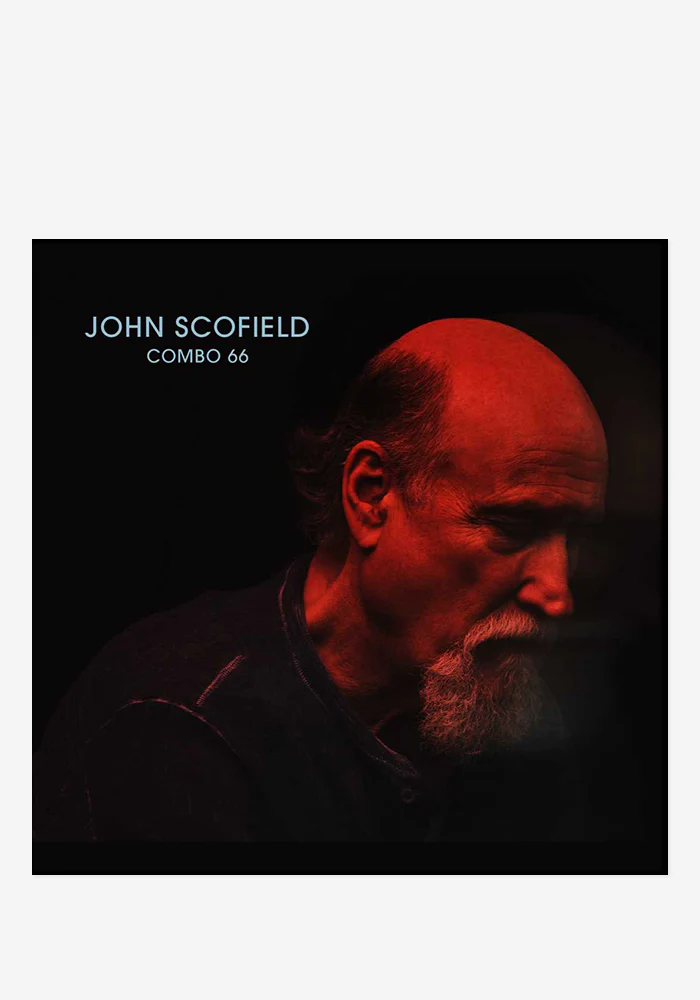
John Scofield keeps his talent and his trusty Ibanez AS200 guitar burning brightly on Combo 66, which finds our man with a new quartet and fresh compositions celebrating what else? Scofield’s 66th birthday!
“I wrote all new tunes for this record, Combo 66,” Scofield notes from where else, the road. “I called it that because—I’m 66! And 66 is the coolest jazz number you can get because if you hit 66 you’re doing ok. Remember all the great records from the 60s? Brasil 66. ‘Route 66.’ It hit me that it would be poetic to use that title.”
Chances are Scofield didn’t realize that in Arabic Abjad numerals, the value of the name of Allah (الله) is 66, or that 66 is a sphenic, triangular and hexagonal number. No, we leave it to our artists to create magic, and that’s what transpires on Combo 66—sanctified jazz sorcery born of searing groove, soul-touching melody, and kinetic improvisation.
Combo 66 swings effortlessly to the condor-like rhythms of drummer Bill Stewart, Scofield’s percussionist of choice since 1992’s What We Do. When it came to bass rhapsodies, Scofield chose upright bassist Vincente Archer of Robert Glasper’s Trio. And for the first-ever keyboard chair in his acoustic quartet, Scofield called upon 34-year-old organist/pianist Gerald Clayton, son of bassist John Clayton of the Clayton-Hamilton Jazz Orchestra.
“Guitar and keyboard is not always the easiest match,” Scofield says. “Because of its percussive nature, piano is very similar to the guitar. But Gerald has a beautiful touch and though he is quite modern, his touch reminds me of Hank Jones or Tommy Flanagan. And that really is a beautiful legato sound that works well with guitar. Even though he’s got super roots in traditional jazz, he can do everything. I’m just thrilled to play with Gerald.”
Combo 66 begins with “I Can’t Dance”, and we’re not talking the Sinatra standard, but a late afternoon swinger imbued with a sense of urban danger.
“It just has this kind of groove quality and since I can’t dance, really, I thought I would dedicate it to myself,” Scofield laughs.
“Combo Theme” recalls the spooky grandeur of a great Henry Mancini soundtrack melody, balanced by Scofield’s wry guitar solo, the equivalent of a Hollywood noir thriller topped off by a meal of Frijoles Charros. Stewart and Clayton are in top form, as well.
“Icons at the Fair” requires an explanation: “We really got some heat happening on this one,” Scofield says. “Years ago, I did a record and a tour with Herbie Hancock, for his album, The New Standard. He had this arrangement of ‘Scarborough Fair’ and I really liked the chords. I used those chords and then wrote a melody which was reminiscent of a lick that Miles [Davis] used to play. So, between Herbie and Miles and Paul Simon’s ‘Scarborough Fair’, I called this ‘Icons at the Fair’.”
The conversational “Willa Jean” was titled for Scofield’s granddaughter, followed by “Uncle Southern”, a light-stepping ¾ dance.
“He’s the old part of my family,” Scofield says. “I’m a Yankee through and through. But my mother’s family is from New Orleans, and this song has a certain Southern Americana sheen. My mother lived up north for 40 years and never lost her southern accent.”
“Dang Swing” is a little bit country, a dab of the devil’s music, and a whole lotta John Scofield. “This is a swing tune, for sure, but it’s got a country vibe,” Scofield says. “It’s a blues with stop choruses. It’s more in the old jazz swing tradition than just about anything I’ve done. But the melody has that country hoedown vibe.”
The jazz waltz returns in “New Waltzo”, and “I think it’s pretty slamming,” Scofield says. “It’s got a rocked-out vamp section then a lyrical chordal second section. So, it spans a few things.”
Something he almost never does, “I’m Sleepin’ In”, is a classic Scofield ballad. A calming yet slightly mysterious number, titled, as is most every track on Combo 66, by Scofield’s wife, Susan Scofield. “It’s quiet and pensive, and I hope, sensitive,” Scofield explains. “Susan’s title seemed to reflect the feeling of the song. What’s more sensitive than a human being when they’re asleep?”
Combo 66 closes with the delightfully swinging “King of Belgium”, dedicated to Belgian harmonica maestro, Toots Thielemans, a man of great humanity, and purportedly, a great sense of humor. A trait shared by John Scofield.
“If you can’t have fun with the music, let’s go home,” Scofield says, alluding to his working credo. “I am so deadly serious about jazz, but the fact of the matter is, jazz only works if you are relaxed and don’t give a shit. If you try too hard, it doesn’t work. Humour really helps me to get to a better place with music.”
Combo 66. A better place with music. And another extraordinary album from John Scofield.
Description
Innovative guitarist, visionary band leader, and singular composer John Scofield has been on a serious roll of late. Scofield’s 2015 release, Past Present, earned the New York native a Grammy Award for Best Jazz Instrumental Album. Scofield followed Past Present with the eclectic Country For Old Men with the Grammy gods granting him the gilded gramophone trophies for Best Jazz Instrumental Album of 2016 and Best Improvised Jazz Solo (“I’m So Lonesome I Could Cry”).
As driven as he is fun-loving, Scofield joined forces with old pals Jack DeJohnette, Larry Grenadier and John Medeski in 2017 for the rural New York jazz band of the ages, Hudson, the quartet romping the world from Boise to Berlin and back again.
John Scofield keeps his talent and his trusty Ibanez AS200 guitar burning brightly on Combo 66, which finds our man with a new quartet and fresh compositions celebrating what else? Scofield’s 66th birthday!
“I wrote all new tunes for this record, Combo 66,” Scofield notes from where else, the road. “I called it that because—I’m 66! And 66 is the coolest jazz number you can get because if you hit 66 you’re doing ok. Remember all the great records from the 60s? Brasil 66. ‘Route 66.’ It hit me that it would be poetic to use that title.”
Chances are Scofield didn’t realize that in Arabic Abjad numerals, the value of the name of Allah (الله) is 66, or that 66 is a sphenic, triangular and hexagonal number. No, we leave it to our artists to create magic, and that’s what transpires on Combo 66—sanctified jazz sorcery born of searing groove, soul-touching melody, and kinetic improvisation.
Combo 66 swings effortlessly to the condor-like rhythms of drummer Bill Stewart, Scofield’s percussionist of choice since 1992’s What We Do. When it came to bass rhapsodies, Scofield chose upright bassist Vincente Archer of Robert Glasper’s Trio. And for the first-ever keyboard chair in his acoustic quartet, Scofield called upon 34-year-old organist/pianist Gerald Clayton, son of bassist John Clayton of the Clayton-Hamilton Jazz Orchestra.
“Guitar and keyboard is not always the easiest match,” Scofield says. “Because of its percussive nature, piano is very similar to the guitar. But Gerald has a beautiful touch and though he is quite modern, his touch reminds me of Hank Jones or Tommy Flanagan. And that really is a beautiful legato sound that works well with guitar. Even though he’s got super roots in traditional jazz, he can do everything. I’m just thrilled to play with Gerald.”
Combo 66 begins with “I Can’t Dance”, and we’re not talking the Sinatra standard, but a late afternoon swinger imbued with a sense of urban danger.
“It just has this kind of groove quality and since I can’t dance, really, I thought I would dedicate it to myself,” Scofield laughs.
“Combo Theme” recalls the spooky grandeur of a great Henry Mancini soundtrack melody, balanced by Scofield’s wry guitar solo, the equivalent of a Hollywood noir thriller topped off by a meal of Frijoles Charros. Stewart and Clayton are in top form, as well.
“Icons at the Fair” requires an explanation: “We really got some heat happening on this one,” Scofield says. “Years ago, I did a record and a tour with Herbie Hancock, for his album, The New Standard. He had this arrangement of ‘Scarborough Fair’ and I really liked the chords. I used those chords and then wrote a melody which was reminiscent of a lick that Miles [Davis] used to play. So, between Herbie and Miles and Paul Simon’s ‘Scarborough Fair’, I called this ‘Icons at the Fair’.”
The conversational “Willa Jean” was titled for Scofield’s granddaughter, followed by “Uncle Southern”, a light-stepping ¾ dance.
“He’s the old part of my family,” Scofield says. “I’m a Yankee through and through. But my mother’s family is from New Orleans, and this song has a certain Southern Americana sheen. My mother lived up north for 40 years and never lost her southern accent.”
“Dang Swing” is a little bit country, a dab of the devil’s music, and a whole lotta John Scofield. “This is a swing tune, for sure, but it’s got a country vibe,” Scofield says. “It’s a blues with stop choruses. It’s more in the old jazz swing tradition than just about anything I’ve done. But the melody has that country hoedown vibe.”
The jazz waltz returns in “New Waltzo”, and “I think it’s pretty slamming,” Scofield says. “It’s got a rocked-out vamp section then a lyrical chordal second section. So, it spans a few things.”
Something he almost never does, “I’m Sleepin’ In”, is a classic Scofield ballad. A calming yet slightly mysterious number, titled, as is most every track on Combo 66, by Scofield’s wife, Susan Scofield. “It’s quiet and pensive, and I hope, sensitive,” Scofield explains. “Susan’s title seemed to reflect the feeling of the song. What’s more sensitive than a human being when they’re asleep?”
Combo 66 closes with the delightfully swinging “King of Belgium”, dedicated to Belgian harmonica maestro, Toots Thielemans, a man of great humanity, and purportedly, a great sense of humor. A trait shared by John Scofield.
“If you can’t have fun with the music, let’s go home,” Scofield says, alluding to his working credo. “I am so deadly serious about jazz, but the fact of the matter is, jazz only works if you are relaxed and don’t give a shit. If you try too hard, it doesn’t work. Humour really helps me to get to a better place with music.”
Combo 66. A better place with music. And another extraordinary album from John Scofield.